
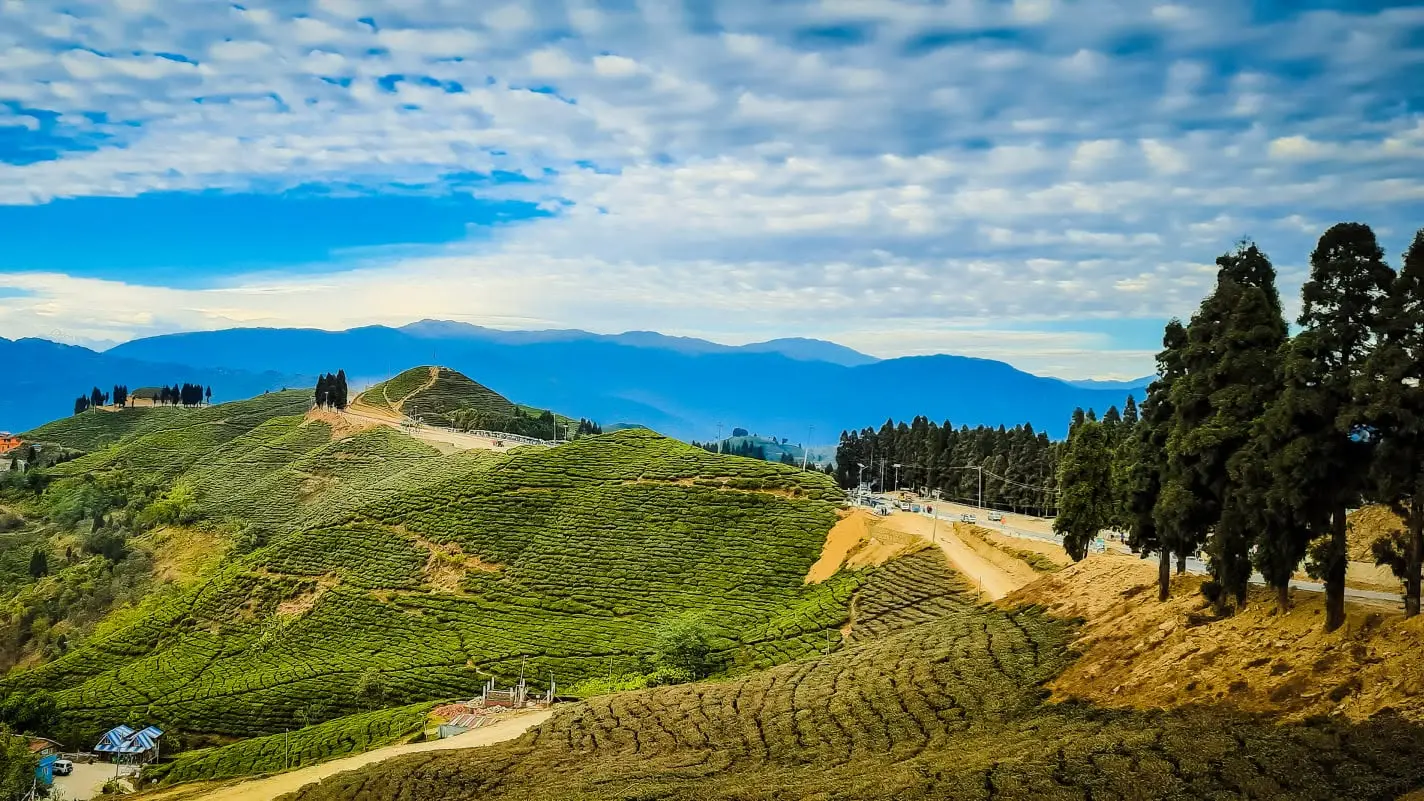
Ilam is a hill district in the far east of Nepal, sitting at roughly 1,200 metres, and most of it is covered in tea. It shares a ridge system with Darjeeling across the Indian border, which is why the tea is so similar and why the hills look the way they do.
I grew up here. This is the guide I give friends who ask me where to start.
Quick answers
Where is Ilam? Far eastern Nepal, in Koshi Province, close to the Indian border near Darjeeling.
How long do you need? Three days is comfortable. Two is rushed. Five lets you slow down and walk.
Best months? October and November, then March to May.
Do you need a permit? No. Ilam is not a restricted area, so no trekking permit or special pass is required.
Is it good for a first trip to Nepal? Only if you want quiet hills and tea country rather than big mountains. Ilam is not a Himalayan viewpoint destination in the way Pokhara is.
Why go to Ilam at all?
Ilam is where you go when you want hills without crowds.
Most visitors here are Nepali families on a long weekend, not international tourists. That changes the feel of the place completely. Prices stay local, nobody is selling you a trek, and the tea gardens are working farms rather than attractions with ticket booths.
The landscape is the draw. Rolling tea slopes, mist that sits in the valleys most mornings, and orange orchards and cardamom plots between the estates. If you have seen photographs of Darjeeling and liked them, Ilam is the same geography with a fraction of the traffic.
It is worth being honest about what Ilam is not. You do not get big Himalayan panoramas from most of the district. On clear winter mornings from the right ridge you can see Kanchenjunga, but that is a specific trip on a specific day, not a guarantee.
How do you get to Ilam?
There are two realistic routes from Kathmandu, and the choice comes down to how much you dislike long bus journeys.
Flying is faster and costs more. Fly Kathmandu to Bhadrapur, which takes about 45 minutes, then continue by road up into the hills. Bhadrapur to Ilam Bazaar is about 64 km and takes roughly two and a half hours by car.
The direct bus is cheap and long. Night buses run from Gongabu in Kathmandu and take somewhere between 16 and 20 hours depending on road conditions.
| Route | Time | Cost |
|---|---|---|
| Kathmandu to Bhadrapur by air | about 45 min | USD 100 to 120 |
| Bhadrapur to Ilam Bazaar, about 64 km | 2.5 hrs by car, longer by bus | NPR 800 to 1,000 |
| Kathmandu to Ilam direct bus | 16 to 20 hrs | NPR 2,000 to 2,900 |
Treat those fares as planning figures, not fixed prices. What you actually pay depends on the vehicle. A normal bus, a deluxe coach, a micro, a shared van and a private taxi are all different prices for the same road. The gap between the cheapest option and the most comfortable one is wide.
One thing worth knowing if you want to check whether a price is fair. The Department of Transport Management publishes official fare rates, but only for inter-provincial routes. Kathmandu to Ilam crosses from Bagmati into Koshi Province, so it is covered. Bhadrapur to Ilam sits entirely inside Koshi, so it is not, and neither is Ilam to Kanyam. Those local fares are set locally and vary more.
If you can afford the flight, take it. The overnight bus is doable but it costs you a day at each end, and the hill section after Bhadrapur is tiring enough on its own.
You do not have to route everything through Ilam Bazaar
Most itineraries assume you base yourself in town and go out from there. You do not have to.
| From Bhadrapur airport to | Distance | Time by car |
|---|---|---|
| Kanyam | about 48 km | about 1.5 hrs |
| Shree Antu | about 60 km | about 2 hrs |
| Ilam Bazaar | about 64 km | about 2.5 hrs |
Shree Antu is closer to the airport than Ilam Bazaar is. If sunrise is the thing you care about, you can land at Bhadrapur and drive straight up to the ridge in about two hours, without going through town at all.
Those times are for a private vehicle. Buses are slower, and they stop.
If you are coming from India, the crossing you use depends on your passport, and this catches people out.
Pashupatinagar, above Ilam on the Darjeeling side, is the closest crossing geographically. It has no Nepali immigration office issuing visas, so in practice it works for Indian and Nepali citizens only. If you hold any other passport, you cannot get a visa on arrival there.
Kakarbhitta, down on the plains near Birtamod, is the eastern crossing with a full immigration office and visa on arrival. Everyone else has to use it, entering from Panitanki on the Indian side.
Rules do change, so confirm with Nepal’s Department of Immigration before you travel rather than turning up at the wrong gate. Full detail in the Pashupatinagar border guide.
When is the best time to visit Ilam?
October and November are the best months. Skies are clearest after the monsoon, the air is cool, and the tea gardens are still green.
March to May is the second window. Warmer, hazier, but the first flush plucking season makes the estates busy in a way that is interesting to watch.
| Season | Months | What to expect |
|---|---|---|
| Autumn | Oct to Nov | Clearest skies, cool, best all round |
| Spring | Mar to May | First flush plucking, warmer, some haze |
| Monsoon | Jun to Sep | Very green, heavy rain, leeches, landslide risk on roads |
| Winter | Dec to Feb | Cold and often clear, best odds of distant mountain views |
Monsoon is the season people underestimate. The hills are at their greenest and the tea looks spectacular, but road access gets unreliable and a landslide can add a day to your journey with no warning.
What is worth doing in Ilam?
Four places carry most of a first trip.
Kanyam
Kanyam is the tea garden most visitors see first, and it is the easiest to reach. It sits on the road between Ilam Bazaar and the plains, so you pass it on the way in if you come via Bhadrapur.
Getting there takes 30 to 45 minutes from Ilam Bazaar. A local taxi costs NPR 200 to 300, because taxis run the Ilam to Jhapa route and Kanyam sits on that same road. You are taking a seat in a vehicle already going that way, not hiring one. A van to yourself runs NPR 1,000 to 1,500 and is worth it for luggage or a group.
Kanyam is the postcard version of Ilam. Wide open slopes, walking paths through the bushes, and tea shops along the highway. Go early. It is the busiest spot in the district on weekends and Nepali holidays, and by mid-morning the roadside is full of parked cars. Full detail in the Kanyam tea garden guide.
Shree Antu
Shree Antu is where you go for sunrise. Antu Pokhari sits about 35 km southeast of Ilam Bazaar, one and a half to two hours by road. The view tower on Antu Danda ridge above it stands at 2,328 metres. Full detail in the Shree Antu sunrise guide.
This is the one place in the district with a real chance of seeing Kanchenjunga on a clear morning. You also look down over the plains of Jhapa and into India. Homestays are around Antu Pokhari, twenty minutes below the ridge, and staying there is the sensible way to do it. The point is being close before dawn, not driving up from Ilam Bazaar after it.
Do not treat the view as guaranteed. Cloud sits on this ridge for weeks at a time in some seasons. Winter gives you the best odds by a wide margin.
Mai Pokhari
Mai Pokhari is a small lake about 22 km north of Ilam Bazaar by road, roughly an hour. It is a Ramsar-listed wetland, which is the international designation for wetlands of recognised ecological importance.
The lake is unusual in shape, with nine distinct corners, and it is a religious site as well as an ecological one. There is forest around it and around 300 bird species recorded in the area. It is a short visit rather than a full day, so pair it with something else rather than building a day around it. Full detail in the Mai Pokhari guide.
Ilam Bazaar and the estate
The town itself is worth half a day. Ilam Tea Estate is the oldest in Nepal, planted in 1863, and you can walk in the gardens. Full detail in the Ilam Bazaar guide. Maisthan Mandir in town is a quick stop, and the bazaar is where to buy tea to take home.
Buy your tea in the bazaar, not at the roadside stalls on the highway. The selection is better, the people selling it know what they are selling, and you can taste before you commit. Good orthodox tea costs more than the highway price and is worth the difference. What to look for is in the Ilam tea guide.
Where do you stay?
Ilam Bazaar has the widest choice of guesthouses and small hotels, and it makes the most sense as a base for a two or three night trip.
Antu Pokhari has homestays, twenty minutes below the Antu Danda viewpoint. Stay there for one night if sunrise matters to you, because the pre-dawn drive from town is not something you want to do twice. Kanyam has resorts and guesthouses along the highway, which suit people travelling in their own vehicle.
Rooms are cheap by the standards of Nepal’s tourist towns. Book ahead around Dashain, Tihar and the school holidays, when Nepali families fill everything at once.
What does a trip to Ilam cost?
Getting here is the expensive part. Everything after that is cheap.
Once you are in the district, local buses cost a few hundred rupees. Most of what is worth seeing has no entry fee at all. Food is priced for local families rather than visitors. If you fly one way and take the bus back, you have already made the decision that sets your budget.
Tea is the one thing worth spending properly on, and it is the thing most people underspend on.
Common mistakes
Treating it as a day trip from the plains. You can technically stop at Kanyam while driving through. You will have seen a roadside tea garden and missed the district.
Coming for mountain views without checking the season. Winter gives the best odds. Booking Antu Danda in monsoon and expecting Kanchenjunga is optimistic.
Underestimating road time. Hill roads in eastern Nepal are slower than the distances suggest. The 35 km to Antu Pokhari takes one and a half to two hours, not forty minutes.
Not building in a buffer day. If you are flying out of Bhadrapur on a tight schedule and the road closes, you miss the flight. Leave a day.
Frequently asked questions
Do foreigners need a permit for Ilam?
No. Ilam is an open district with no restricted area permit or trekking permit requirement. You need a valid Nepal visa to be in the country, but nothing additional for the district itself.
How many days is enough for Ilam?
Three days covers Kanyam, Shree Antu and Mai Pokhari without rushing. Two days works if you skip one of them. Five days lets you walk between places rather than drive.
Can you see Kanchenjunga from Ilam?
Yes, from Antu Danda on a clear morning, most reliably in winter. It is not visible from most of the district and it is never guaranteed.
Is Ilam better than Darjeeling?
They are the same landscape on opposite sides of a border. Darjeeling has more infrastructure and far more visitors. Ilam is quieter and cheaper. If you want tea hills without crowds, Ilam wins.
What is Ilam famous for?
Orthodox tea, primarily. The district also produces cardamom, ginger and oranges, and Mai Pokhari is a Ramsar-listed wetland.
Is Ilam safe for solo travellers?
Yes, by normal standards for rural Nepal. The usual rural cautions apply more than any Ilam-specific risk: roads at night, weather, and limited mobile signal in places.
Before you go
Ilam rewards a slower trip than most people give it. Three days and a willingness to walk between tea gardens will show you more than a packed itinerary driven end to end.
If you want the plan rather than the pieces, the 3 day Ilam itinerary sets out where to sleep each night and which order to do things in.
If you have been and something here is out of date, particularly a fare or a road condition, tell me and I will fix it. More about who writes this and why on the about page.