
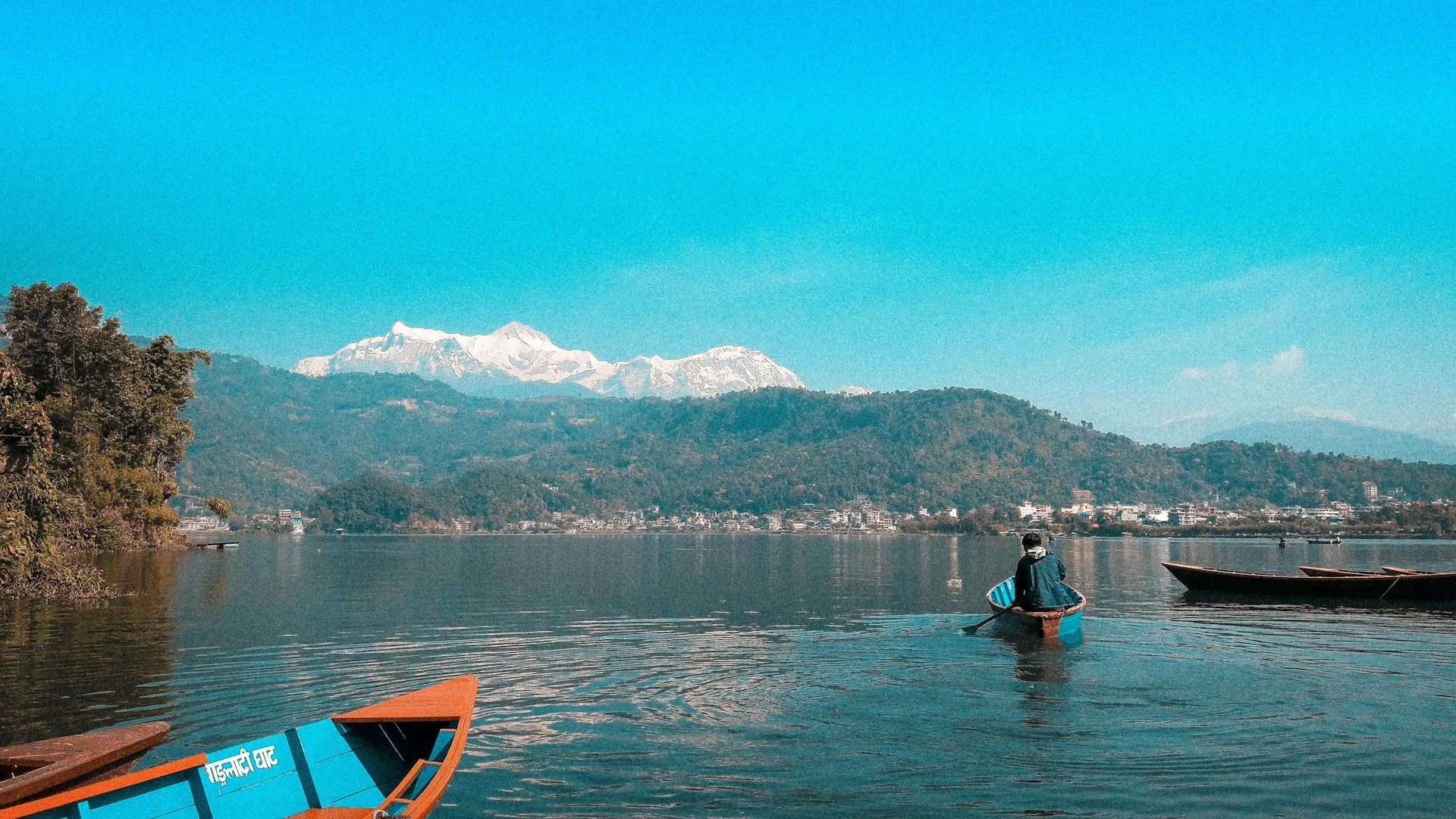
Phewa Lake is the reason Pokhara looks the way it does on every poster of Nepal. It covers 4.4 square kilometres, it is the second largest lake in the country, and the whole tourist strip of Lakeside exists because of it.
Getting out on the water is worth doing. It is also a tourist thing, and I would rather say both than pretend otherwise. You will be one of many small boats crossing to the same small island. That does not make it a waste of an afternoon, it just means you should know what you are buying.
The part almost nobody writes about is what happens on the shore at six in the evening. I will get to that, because it is the best hour of the day here and it costs nothing.
What a boat on Phewa Lake costs
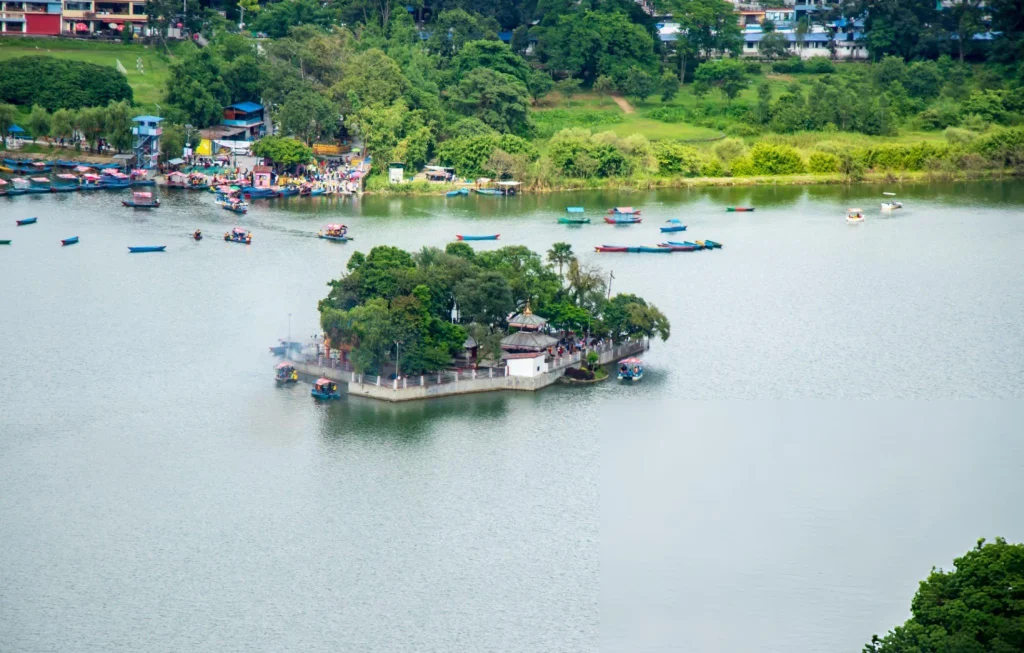
Boats start at NPR 250 in May 2026, and that is per boat rather than per person. A boat takes four.
Split four ways that is cheap enough to be irrelevant to your budget. The price moves depending on how long you want it, whether you row yourself or take a boatman, and how busy the day is. Treat 250 as the floor, not the fixed rate.
You hire from the eastern shore along Lakeside. There is no single ticket office, just boats and the people who own them, so the price is a conversation rather than a posted rate.
Tal Barahi, the temple in the middle of the lake
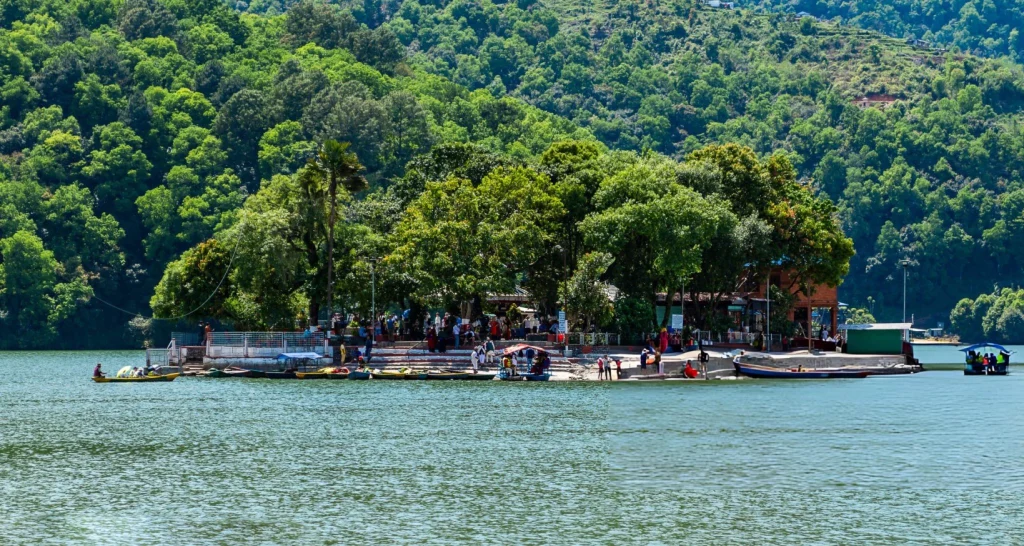
Tal Barahi sits on a small island a short row from the Lakeside shore, and it is the standard reason people take a boat out.
I went. It is a genuine working temple rather than a monument, and Nepali visitors come to worship rather than to photograph it, which changes the feel of the place. The island itself is small. You are not going to spend an hour there.
Here is the honest framing. The temple is not spectacular in the way a first-time visitor might be expecting from the photographs. What makes the trip worthwhile is the crossing, the view back at the town with the hills behind it, and being on the water. If the temple were on the shore, nobody would queue for it.
So take the boat. Just take it for the ride as much as the destination.
The evening aarati at Barahi Ghat
This is the thing I would tell a friend to make time for, and it is missing from most guides to Pokhara.
Every evening at around six, priests perform an aarati on the banks of Phewa Lake at Barahi Ghat, facing the temple. Lamps, bells, chanting, and a crowd on the benches and the steps behind. It is run by the Mata Talbarahi Aarati Sewa Samiti, a committee formed in 2018 specifically to build cultural tourism in Pokhara, and three priests lead it. The Kathmandu Post has written about it in more detail than any travel blog has.
Hundreds of people turn up. The benches hold perhaps seventy, so arrive before six if you want to sit rather than stand at the back.
What makes it good is that it is not a performance staged for visitors, even though visitors are welcome and plenty attend. Devotees are there because it is their evening ritual. You are watching something that would happen whether you came or not, which is rare in a town that sells as much as Lakeside does.
It is free. In a place I have already said is more expensive than Kathmandu, that is worth noticing.
Morning or evening on the water?
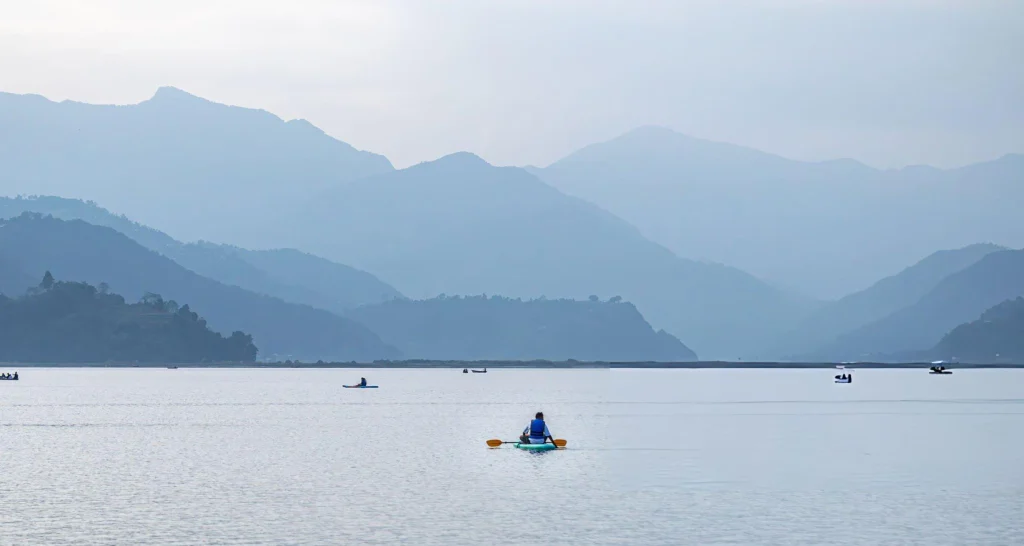
Morning for the mountains, evening for the atmosphere.
On a still morning the Annapurnas reflect in the lake, and that reflection is the photograph on every Nepal tourism poster. It needs cloudless sky and flat water, so it is an autumn and winter thing more than a spring one. By mid-morning in most seasons the haze has come up and the reflection has gone.
Afternoon wind picks up on the lake, which is another reason boats are better earlier. Then the evening belongs to the ghat rather than the water.
If you only have one day in Pokhara, that is the shape of it: boat in the morning, everything else in the middle, aarati at six.
Phewa is one of nine
Most visitors see Phewa, maybe Begnas, and assume that is the lot. The valley has nine.
The Lake Cluster of Pokhara Valley has been a Ramsar site since 2 February 2016, covering roughly 261 square kilometres including the catchment. Ramsar listing is the international designation for wetlands of recognised ecological importance. The nine are Phewa, Begnas, Rupa, Khaste, Dipang, Maidi, Gunde, Neurani and Kamalpokhari, plus the Seti catchment.
Seven of those get almost no tourist traffic at all. That is not a recommendation to go and find them, because most have no facilities and no reason to visit unless birds are your thing. It is context for why the valley looks the way it does.
Questions people actually ask
How much is a boat on Phewa Lake? From NPR 250 per boat in May 2026, and a boat holds four people. Rates vary with duration and season, and you agree the price with the owner rather than at a ticket window.
Is Tal Barahi temple worth visiting? Yes, but for the boat ride and the view back at Pokhara more than for the temple itself. It is small, and it is a working place of worship rather than a sight.
What time is the aarati at Phewa Lake? Around six in the evening, daily, at Barahi Ghat on the Lakeside shore. Get there before six for a seat.
Can you swim in Phewa Lake? People do, though it is not what most visitors come for and the lake is busy with boats near the Lakeside shore.
Is Phewa Lake or Begnas Lake better? Phewa is convenient and busy, Begnas is quiet and rural. On a short trip Phewa wins on time alone. If you have several days, Begnas is the one that feels like the countryside.
What I would do with one afternoon
Take a boat out mid-morning, cross to Tal Barahi, come back, and spend the rest of the day elsewhere in the valley. Then be at Barahi Ghat before six.
The boat is the part everyone books. The aarati is the part people remember, and almost nobody plans for it.
If you are still working out what else is worth your time, the things to do in Pokhara guide sorts the valley’s sights into what earns a visit and what is a fifteen minute stop. Getting here in the first place is covered in Kathmandu to Pokhara, and Pokhara Lakeside covers what a room on the strip costs. If you are working to a fixed number of days, the Pokhara itinerary sets out what fits into two, three or five.
Prices on the lake move. If you have been recently and yours were different, tell me and I will update this.