
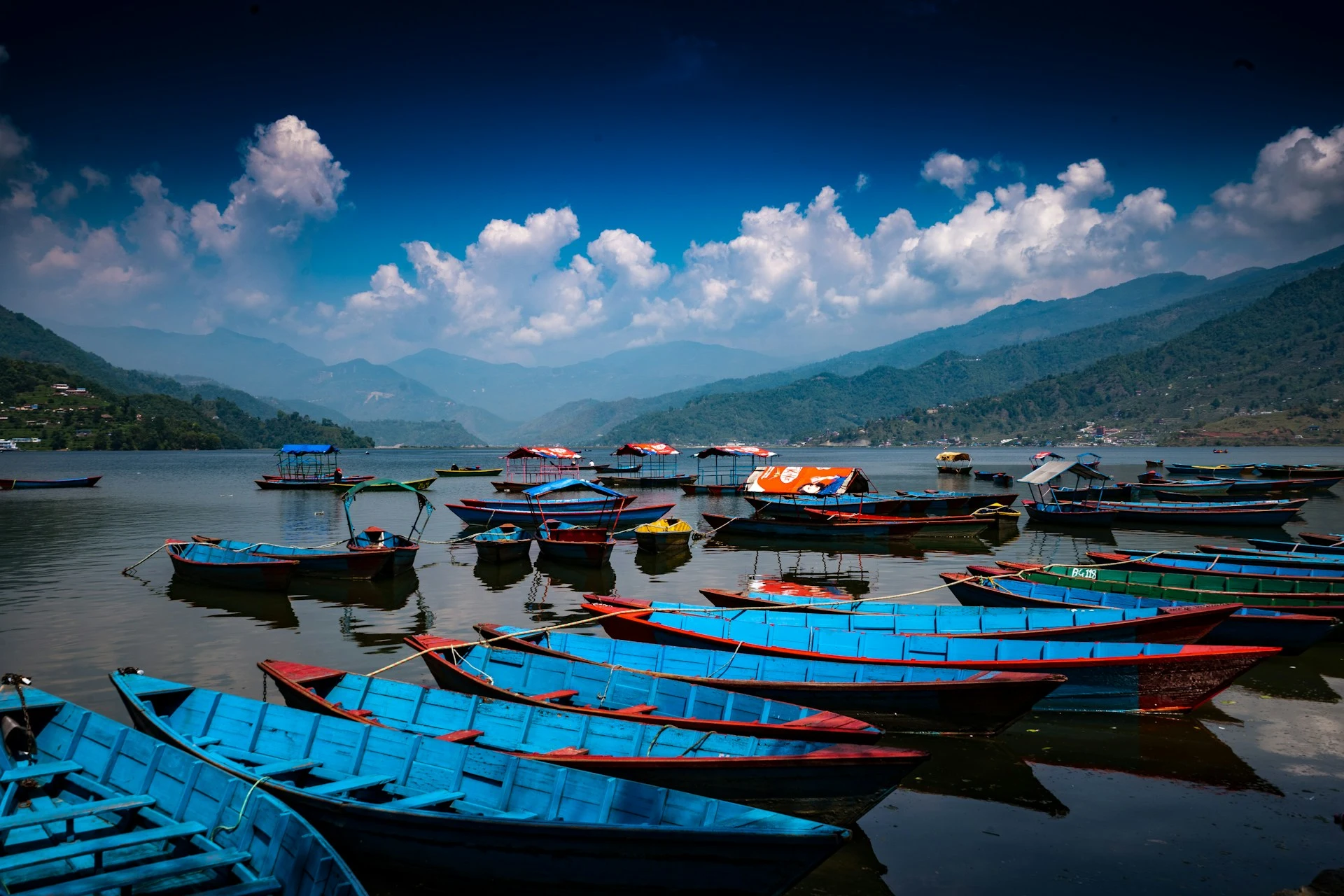
Two days in Pokhara is enough to see the main sights. Three is enough to enjoy them. Five is when the place stops being a checklist.
I have done the two day version, and I want to be straight about that up front: I did it because I had a company meeting to get back for, not because I think it is the right way to see Pokhara. It worked. I would not repeat it by choice.
Here is what each version gets you.
| Days | What you get | What you give up | |
|---|---|---|---|
| Rushed | 2 | Every main sight, one long taxi day | Time at any of them, and a night bus home |
| Comfortable | 3 | The same sights at a human pace | Begnas, and anything outside the valley |
| Proper | 5 | Slow mornings, walking, the quiet lake | Nothing much, if the weather holds |
The two day version, which is what I did
This is a real itinerary with real times and prices, not a suggestion. It is also the tightest I would ever want to run it.
Day one: get there
I took a Hiace from Kalanki in Kathmandu at 2pm and reached the Prithvi Chowk bus park in Pokhara at 8pm. NPR 900 per person in May 2026, and that was through heavy rain. Taxi to Lakeside, NPR 300, hotel, sleep. Nothing else happens on day one, and you should not plan anything.
The full detail on that journey, including why I would take a day bus over a night one, is in Kathmandu to Pokhara. Where to sleep once you arrive is in Pokhara Lakeside, and the boat, the temple and the aarati are covered in Phewa Lake.
Day two: everything, by taxi
Out at 4am. This is the part worth copying.
I booked a taxi on inDrive and asked the driver whether there was a package to cover all the sights in one day. He said yes, and that every taxi does this. The price he offered was NPR 6,000 for a full day charter of the whole car, in May 2026.
That single decision is what makes two days possible. The sights are scattered across the valley in four different directions, and doing them on public transport or by booking separate rides would eat the day in waiting. One car for one price removes the problem.
In that one day we covered:
- Sarangkot for sunrise, which is why you leave at four
- Phewa Lake
- World Peace Pagoda
- Davis Falls
- Gupteshwor Cave, directly across the road from Davis Falls
- Begnas Lake
- Pumdikot
- Mahendra Cave
- Bindhyabasini Temple
Then the evening aarati at Barahi Ghat, which happens daily at around six on the Phewa shore. After that, taxi back to Prithvi Chowk and the 9pm night bus to Kathmandu.
Two honest warnings about that price. It was close to off season. In peak season the number will be different, and it is set by the driver rather than by a rate card, so ask more than one. And NPR 6,000 is for the car, so it is a good deal split between three or four people and an expensive day on your own.
What happened on the way home
The night bus hit the roadside safety wall at Nagdhunga Naubise. Nobody was hurt. The driver said an oncoming truck was sitting in the middle of the road. We changed buses and carried on, got into Kathmandu at 4am, and I was at my desk by 9.
I tell people to take the day bus rather than the night bus, and on this trip I took the night bus anyway, because a two day trip does not work otherwise. That is the trade off, and I would rather show it than pretend I always follow my own advice.
The three day version
Three days is the one I would actually recommend to most people.
Day one is the same. Travel, arrive, sleep. If you leave Kathmandu in the morning rather than at 2pm you get an evening in Lakeside, which is worth something.
Day two is the sunrise and the western side of the valley. Sarangkot early, then Phewa Lake and a boat across to Tal Barahi, then the World Peace Pagoda. Take the boat and walk up to the pagoda rather than driving around, which turns a viewpoint into a proper half day and is the single best change three days buys you.
Day three is the southern sights and the lake in the evening. Davis Falls and Gupteshwor Cave sit opposite each other, so they are one stop rather than two. Add Pumdikot, then be at Barahi Ghat before six for the aarati. Night bus or a morning departure the next day.
You still need a vehicle for parts of this, but you are not paying for a full day charter and you are not eating breakfast in a car.
The five day version
Five days is when Pokhara stops being a list of places and becomes somewhere you have been.
The extra two days do not buy more sights. They buy time at the ones you already planned to see, and that is the point. Spend a full morning on the water instead of an hour. Walk to the Peace Pagoda and back rather than being driven. Go out to Begnas and give it most of a day, because it is the quiet, rural version of what Phewa is, and rushing it defeats the purpose entirely.
It also gives you weather margin, which matters more here than people expect. The mountains are conditional. If your one clear morning is the one morning you allocated to Sarangkot, you have a problem. With five days you get several attempts.
And you get to do nothing for an afternoon, which in a town built around a lake is a legitimate use of time.
So how many days do you need in Pokhara?
Two if you are working around a deadline. Three if you have a choice. Five if you want to understand the place rather than photograph it.
My honest view, having done it the fast way, is that the two day version is a compromise rather than a plan. It works, all the main sights are genuinely reachable in one charter day, and if that is what your schedule allows then take it and enjoy it. But the valley rewards slowness, and almost everything I would go back for is something I did not have time to do properly.
What does a two day trip to Pokhara cost? Roughly NPR 900 each way for the bus, NPR 1,500 a night for a room, NPR 300 for a taxi from the bus park, and NPR 6,000 for the full day charter split between however many of you there are. All May 2026.
Is two days enough for Pokhara? Enough to see it, not enough to enjoy it. You will tick every box and remember very little.
What is the one thing to book differently? Ask your taxi driver about a full day package rather than paying per trip. Every driver has one and almost no guide mentions it.
For what each of those sights is actually like, and which of them undersell themselves, see things to do in Pokhara.
If you have run this route recently and the charter price has moved, tell me and I will update it.